
On July 4, 2026, the United States reaches a remarkable milestone: its 250th anniversary. Two and a half centuries have passed since delegates of the Continental Congress adopted the Declaration of Independence, formally announcing to the world that thirteen colonies intended to become a new nation.
The semiquincentennial, as historians formally call it, is more than a birthday celebration. It is an opportunity for reflection, gratitude, and honest examination of the American story.
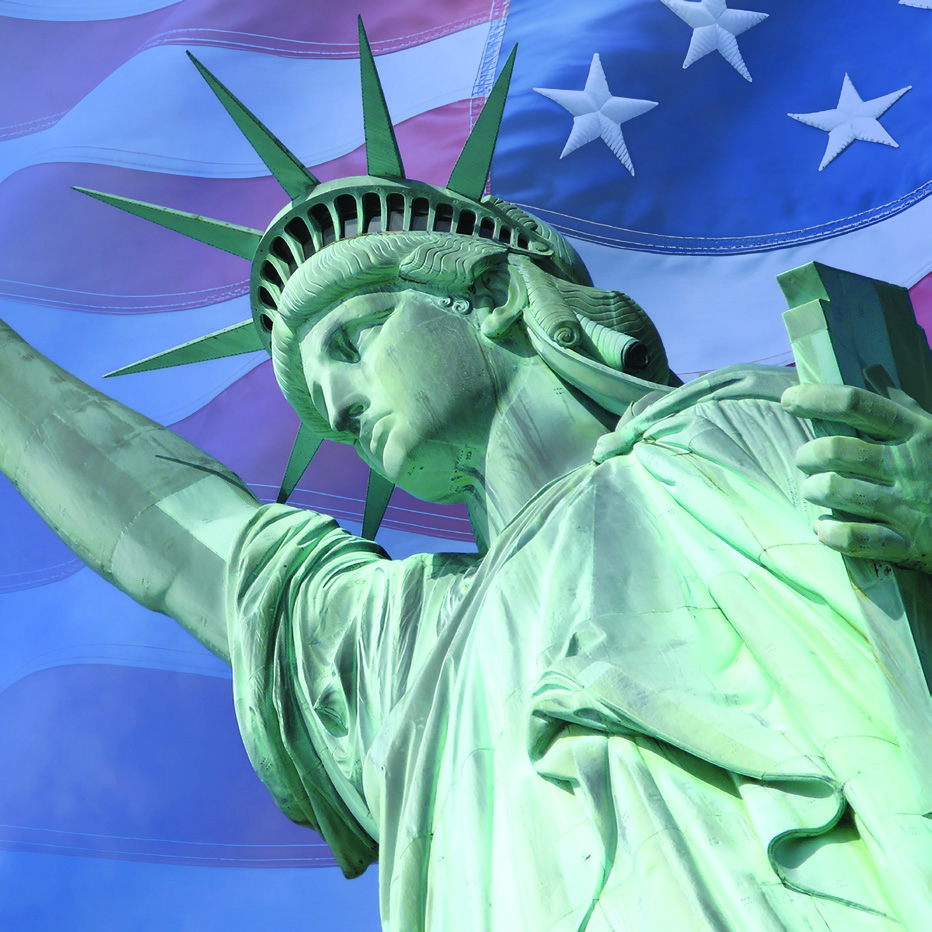
Few nations have experienced a journey as consequential, complex, and transformative as that of the United States. From a fragile republic hugging the Atlantic coastline, America has grown into a continental nation, a global economic powerhouse, a center of innovation, and a beacon of democratic ideals for millions around the world. Yet the nation’s history has also been marked by contradictions, struggles, and unfinished promises. The 250th anniversary invites Americans not only to celebrate their achievements but also to consider how the next chapter should be written.
The founding generation articulated a revolutionary idea in 1776: that all people possess certain unalienable rights and that governments derive their legitimacy from the consent of the governed. Those principles, expressed in the Declaration of Independence, challenged the prevailing political order of the eighteenth century. While the reality of the era fell far short of those ideals, the words themselves became a standard against which future generations would measure the nation.

The American Revolution was only the beginning. The young republic faced daunting challenges in its first decades. The Constitution established a framework for self-government that has endured longer than any other written national constitution still in active use today. Leaders such as George Washington, James Madison, and Alexander Hamilton helped shape institutions that would guide the nation through periods of uncertainty, growth, and conflict.
As the United States expanded westward, it experienced extraordinary economic development and territorial growth. New states joined the Union, industries emerged, and waves of immigrants arrived seeking opportunity and freedom. The nation became a destination for people from every corner of the globe, each bringing traditions, languages, and aspirations that enriched the American experience.
Yet America’s growth came with profound moral and human costs. Indigenous peoples were displaced from ancestral lands through warfare, treaties, and forced removals. Millions of Africans and their descendants endured the horrors of slavery, an institution fundamentally at odds with the principles proclaimed in 1776. The tension between the nation’s ideals and its realities became impossible to ignore.
The defining crisis arrived in the nineteenth century with the American Civil War. The conflict claimed hundreds of thousands of lives and tested whether the nation could survive its deepest divisions. The abolition of slavery marked a turning point in American history, but the struggle for equality did not end with emancipation. Generations of Americans would continue working to expand civil rights and ensure that constitutional promises applied to all citizens.
Throughout the twentieth century, the United States emerged as a leading force on the world stage. American soldiers fought in two world wars and helped shape the postwar international order. The nation played a central role in the struggle against fascism and later in the long geopolitical contest of the Cold War. At home, scientific innovation transformed everyday life. The automobile, aviation, telecommunications, computers, and the internet revolutionized how people lived, worked, and connected.
Perhaps no achievement better symbolizes the nation’s spirit of ambition and ingenuity than the Apollo 11 Moon Landing. When astronauts set foot on the Moon in 1969, they demonstrated what could be accomplished when vision, investment, and determination converged. The achievement became not only an American triumph but also a milestone for humanity.

The story of America is equally the story of ordinary citizens whose contributions rarely appear in textbooks. Farmers who cultivated the land, factory workers who powered industrial growth, teachers who educated generations, entrepreneurs who built businesses, immigrants who pursued better lives, and service members who defended the nation all helped shape the republic. The strength of the United States has never rested solely in its institutions or leaders; it has depended on the energy, resilience, and aspirations of its people.
The nation’s progress has often come through movements demanding change. The women’s suffrage movement secured voting rights for women. Labor movements improved working conditions and economic protections. The civil rights movement challenged segregation and discrimination. Leaders such as Martin Luther King Jr. reminded the country that its founding ideals required continual renewal and expansion. These movements illustrate a uniquely American characteristic: the belief that the nation can improve itself while remaining faithful to its core principles.
As America marks its 250th anniversary, it does so amid significant challenges. Political polarization, economic inequality, technological disruption, and questions about America’s role in the world generate vigorous debate. Many citizens express concern about the health of democratic institutions and the tone of public discourse. Yet disagreement itself is not new. American history has been marked by contentious debates from its earliest days. The challenge is not eliminating differences but finding ways to navigate them constructively.
The semiquincentennial offers an opportunity to rediscover shared values that transcend political divisions. Americans may disagree on policy, but many remain united in their commitment to liberty, opportunity, self-government, and the rule of law. These principles have sustained the nation through wars, depressions, social upheavals, and periods of profound change.
The anniversary also provides an opportunity to recognize the extraordinary diversity of the modern United States. Today’s America reflects contributions from people of every race, ethnicity, religion, and background. This diversity is one of the nation’s greatest strengths. It has fostered creativity, innovation, and cultural richness while reinforcing the idea that American identity is defined not by ancestry alone but by shared civic ideals.
Looking ahead to the next 250 years, the nation faces questions that previous generations could scarcely imagine. Advances in artificial intelligence, biotechnology, renewable energy, and space exploration are poised to reshape society. Climate challenges, global competition, and demographic changes will require thoughtful leadership and civic engagement. The decisions made today will influence the opportunities available to future generations.
History suggests that America is at its best when it embraces both confidence and humility—confidence in the enduring power of its founding principles and humility in recognizing that the work of perfecting the Union is never complete. The founders themselves understood that democracy would require constant stewardship. Each generation inherits the responsibilities of citizenship and contributes its own chapter to the national story.
The 250th anniversary is therefore more than a commemoration of the past. It is a reminder that the American experiment continues. The Constitution, the Declaration of Independence, and the nation’s democratic institutions are not relics preserved behind glass; they are living frameworks that depend upon the participation of informed and engaged citizens.
As fireworks illuminate the skies on Independence Day 2026, Americans will rightly celebrate a nation that has endured for a quarter of a millennium. They will honor the courage of those who fought for independence, the sacrifices of those who preserved the Union, the determination of those who expanded liberty, and the contributions of millions who built communities across the continent.
The United States at 250 is neither a finished masterpiece nor a failed project. It is an ongoing endeavor—imperfect, ambitious, resilient, and continually evolving. Its history contains moments of greatness and episodes of failure, achievements worthy of pride and lessons that demand remembrance. Together, they form the story of a nation still being written.
The true significance of America’s 250th anniversary lies not only in what has been accomplished since 1776, but in what remains possible. The next chapter belongs to the citizens who will shape the future, guided by the same enduring question that has animated the republic from the beginning: how can a free people build a more perfect Union?

This article is from the
EY June 2026 Issue