
By: Greg Hanson
“We three kings of Orient are.” That’s what the traditional Christmas carol proclaims. But who were these kings? And what do they really have to do with Christmas?
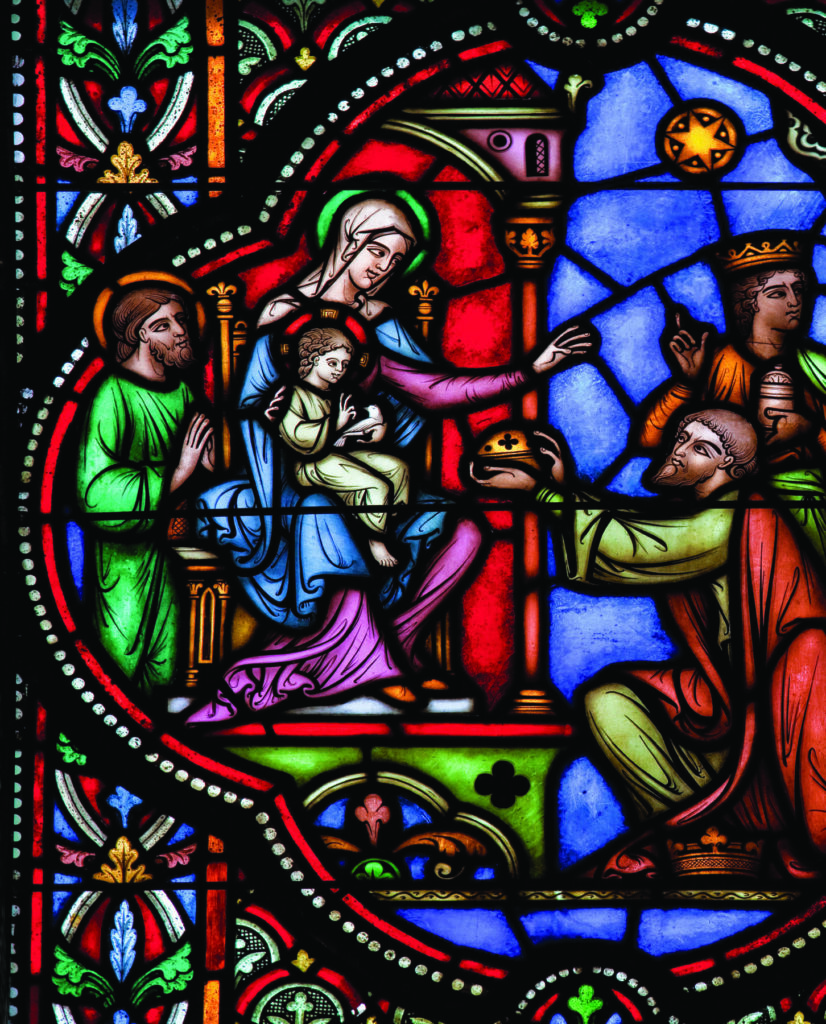
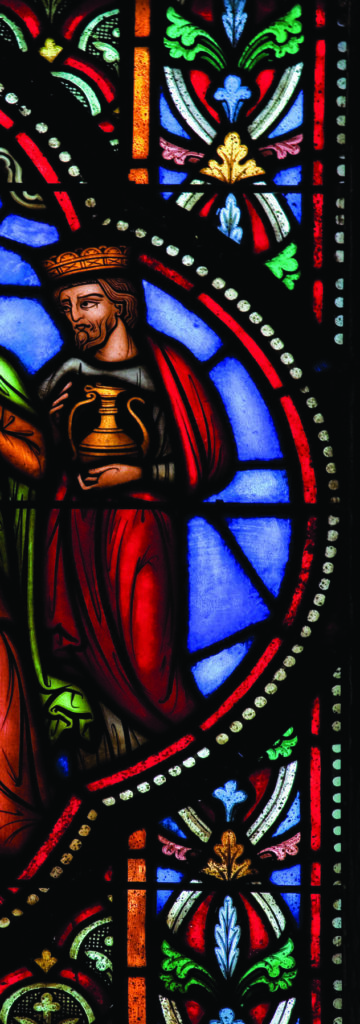
The annual celebration of Christmas is founded on the birth of Jesus Christ about two thousand years ago. According to the Bible, when Jesus was born visitors from an eastern land came to see the newborn child. They came to worship Jesus and to offer him gifts. The account of this visit is found in the Gospel of Matthew chapter two. Over the years, these visitors have been called magi, magicians, astrologers, astronomers, and kings. But perhaps the most common (and the most accurate) term is “wise men.” While the Christmas carol tells us that there were three of them, the Biblical record does not actually specify a number. It does tell us that they brought with them three kinds of gifts, so that has led to the traditional belief that there were three wise men in total. Tradition has even given these three wise men names: Casper, Melchior, and Balthasar. But instead of three wise men, it is more likely that there were several traveling together.
So where did they come from? We do not know the answer to that, either. The passage from the Gospel of Matthew tells us they came from the east. That could mean they came from Persia (Iran), Babylon (Iraq), Syria, or as far away as India or the Orient. Wherever they were from, the wise men traveled to the Judean town of Bethlehem to see the baby Jesus.

The Bible tells us they traveled by following a star. Was this an actual star? Perhaps. It could have been a supernova. Or as some scholars suggest, it might have been a meteor, a comet, or a conjunction of planets. Whatever it was, the text tells us that it caught the attention of the wise men. They believed it would lead them to a newborn king, they chose to follow it, and it led them to the place where Jesus was.
Why would they follow a star? Why would a star prompt the wise men to set out on their journey? A possible answer is that the wise men were familiar with ancient Jewish writings. Six hundred years earlier, much of the Jewish population had been led away as captives into Babylon. When that happened, the Jews would have taken their Scriptures with them. If the wise men came from that region, it is possible that they knew of the verse from the Jewish Torah that told of a future king of Israel appearing like a star.
As these wise men were traveling through Israel, they chose to stop in Jerusalem to see King Herod. They asked Herod if he was aware of the birth of a newborn king of the Jews. Herod was not aware of the birth of Jesus, but their question worried him. His authority would be threatened by a new king. Herod consulted his advisors, and they told him about two Old Testament prophecies written centuries earlier by Micah and Samuel. These prophecies foretold a birth in Bethlehem of a child who would become ruler.
According to the Bible, Herod told the wise men they could find the baby in Bethlehem. But then he asked that the wise men return to tell him where the baby was. He told the wise men he wanted to worship the baby himself, but he was actually plotting to dispose of the baby.

The wise men continued on their way, still following the star. The star led them to Bethlehem, and then it seemed to stop over a particular house. The wise men entered the house and found Mary, Joseph, and the baby Jesus. The wise men proceeded to give their gifts to Jesus. They gave gifts of gold, frankincense (an expensive perfume often used as an anointing oil), and myrrh (used for purifying and embalming). This practice of giving gifts at Christmas time has continued to the present day.
After they gave their gifts, the wise men headed back to their homeland. The Bible tells us that they had been warned not to tell Herod where to find Jesus, so they traveled home by a different route.
While this visit by the wise men is usually wrapped up into our modern celebration of Christmas, it is unlikely that they actually arrived on the night Jesus was born. Perhaps that was when their journey began, but they did not arrive until up to two years later. Nevertheless, the wise men appear every Christmas in nativity scenes and in Christmas productions. They are often recognized for their faith in following the star, their generosity in offering gifts, and their heartfelt worship of the baby Jesus.
Merry Christmas!


This article is from the EY December 2025 Issue